Challenge
Create a robust platform for data scientists that exponentially increased the ability to test, run, and analyze AI/ML models—accelerating delivery of insights and enhancing impact for BCG clients.
Overview
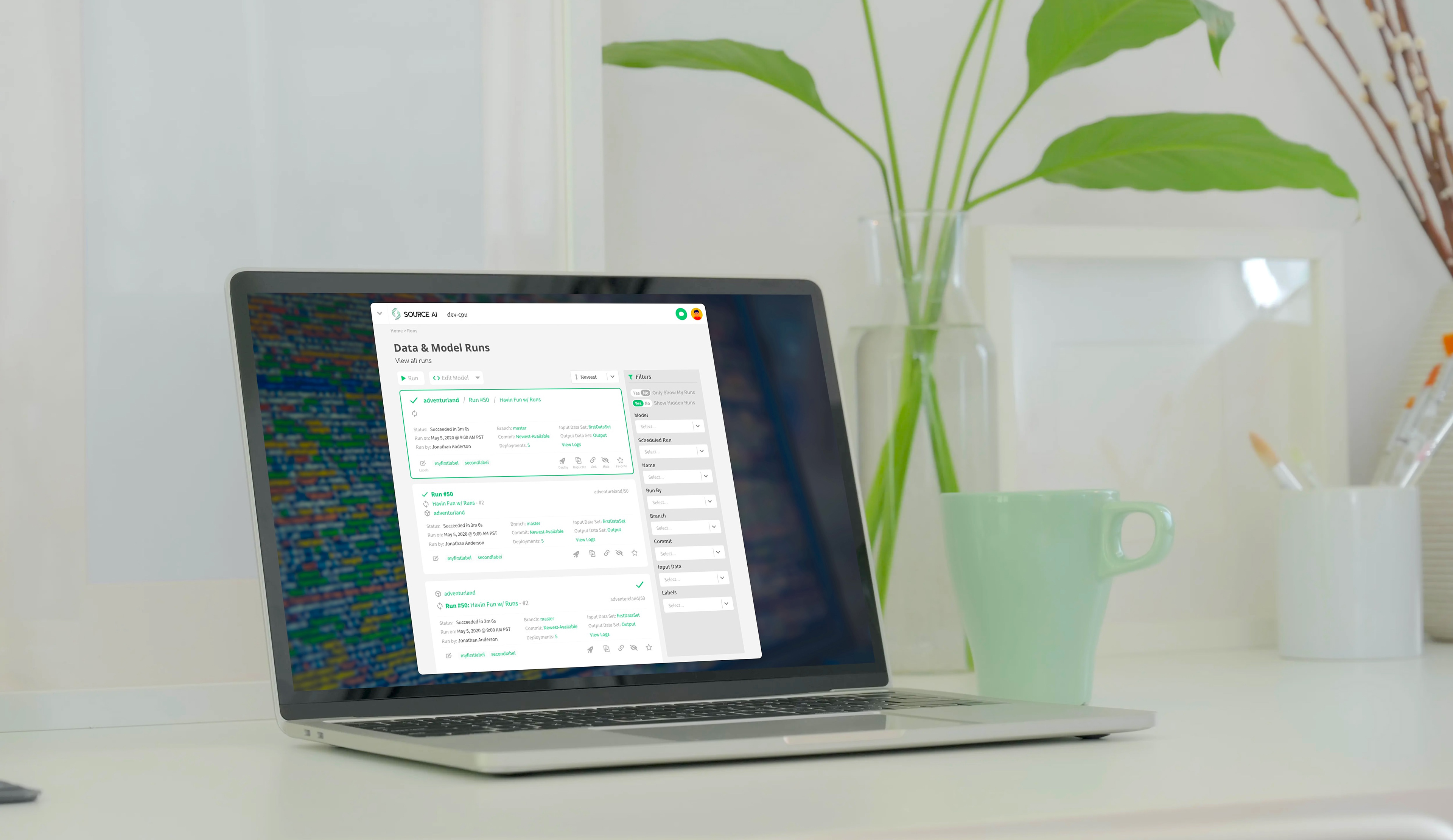
Led product design for Source.AI, a startup product incubated within BCG and built for their consulting data scientists. My role spanned from hands-on design execution to cross-functional leadership. I drove the UX and UI evolution of the platform, aligning tightly with product, engineering, and end users to deliver value quickly and consistently.
Beyond shipping design work, I helped operationalize design and research, embedding continuous feedback loops, research-driven roadmapping, and prioritized epics. This strategic foundation elevated both the product experience and the team’s velocity. Source.AI's improvements ultimately helped drive increased platform usage, enhanced support for high-profile government clients, and contributed to its acquisition by DataRobot.
Beyond shipping design work, I helped operationalize design and research, embedding continuous feedback loops, research-driven roadmapping, and prioritized epics. This strategic foundation elevated both the product experience and the team’s velocity. Source.AI's improvements ultimately helped drive increased platform usage, enhanced support for high-profile government clients, and contributed to its acquisition by DataRobot.
Results
• Thousands more model runs per day due to optimized workflows and usability
• Increased engagement and adoption across BCG teams and clients
• Source.AI’s acquisition by DataRobot in a strategic partnership with BCG
• Increased engagement and adoption across BCG teams and clients
• Source.AI’s acquisition by DataRobot in a strategic partnership with BCG
Industries
AI, Consulting, Machine Learning, Data Science, Agile Data Science, Data Modeling
AI, Consulting, Machine Learning, Data Science, Agile Data Science, Data Modeling
Roles & Services
Design Lead, User Experience (UX), User Interface (UI), User Research, Information Design, Functional Design, Roadmapping
Design Lead, User Experience (UX), User Interface (UI), User Research, Information Design, Functional Design, Roadmapping
Press Release
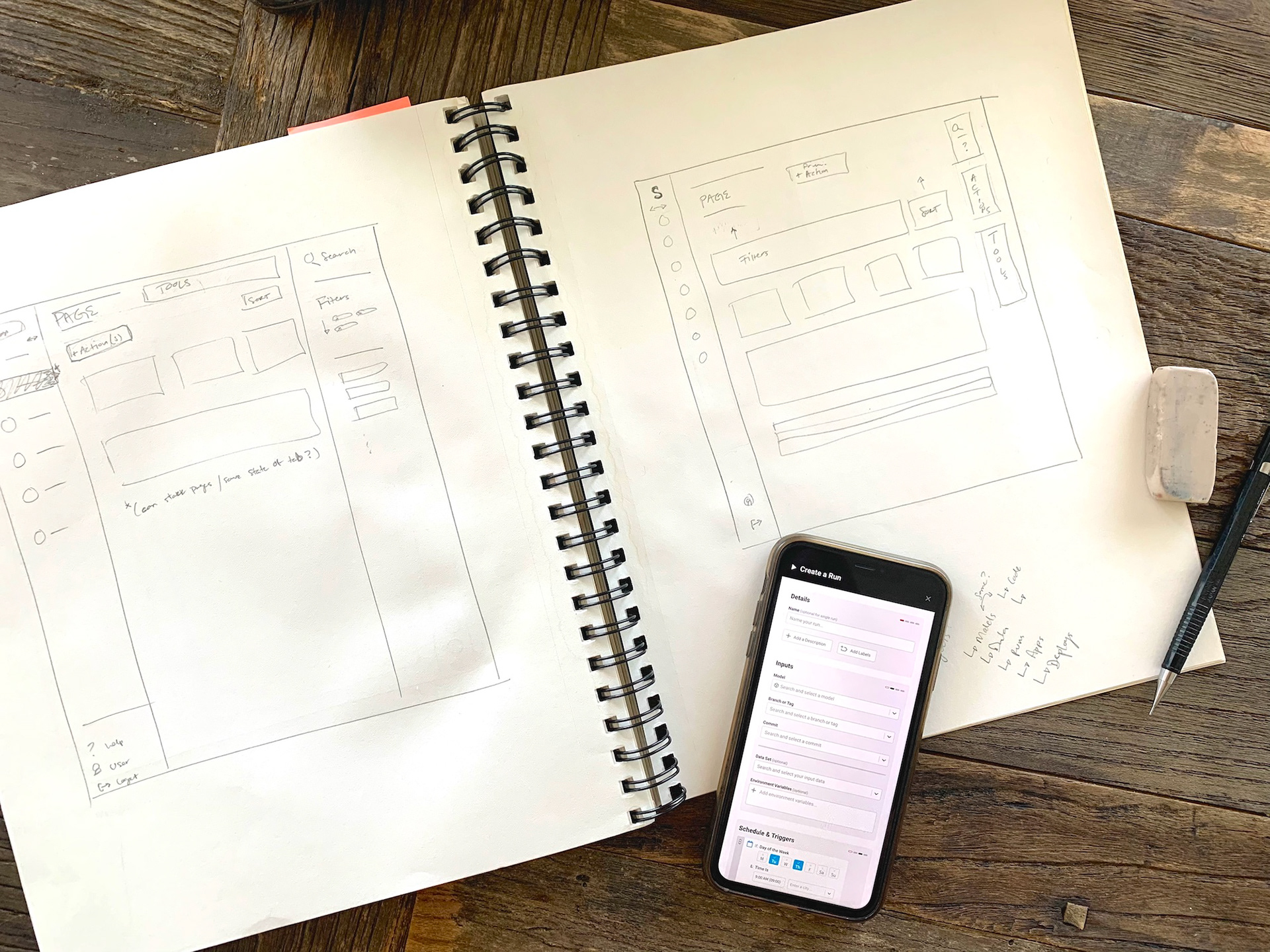
Immersive Onboarding & Discovery
I entered with limited domain knowledge in data science and ML, so I leaned into rapid onboarding by interviewing stakeholders, shadowing users, and auditing the existing product. This hands-on immersion helped me ramp up quickly and begin identifying friction points in the workflow.
Collaborating closely with engineering and product, I established a shared understanding of current gaps, product potential, and key personas. This cross-functional partnership helped seed a culture of curiosity, transparency, and fast learning across the team.
Collaborating closely with engineering and product, I established a shared understanding of current gaps, product potential, and key personas. This cross-functional partnership helped seed a culture of curiosity, transparency, and fast learning across the team.
Design Operations
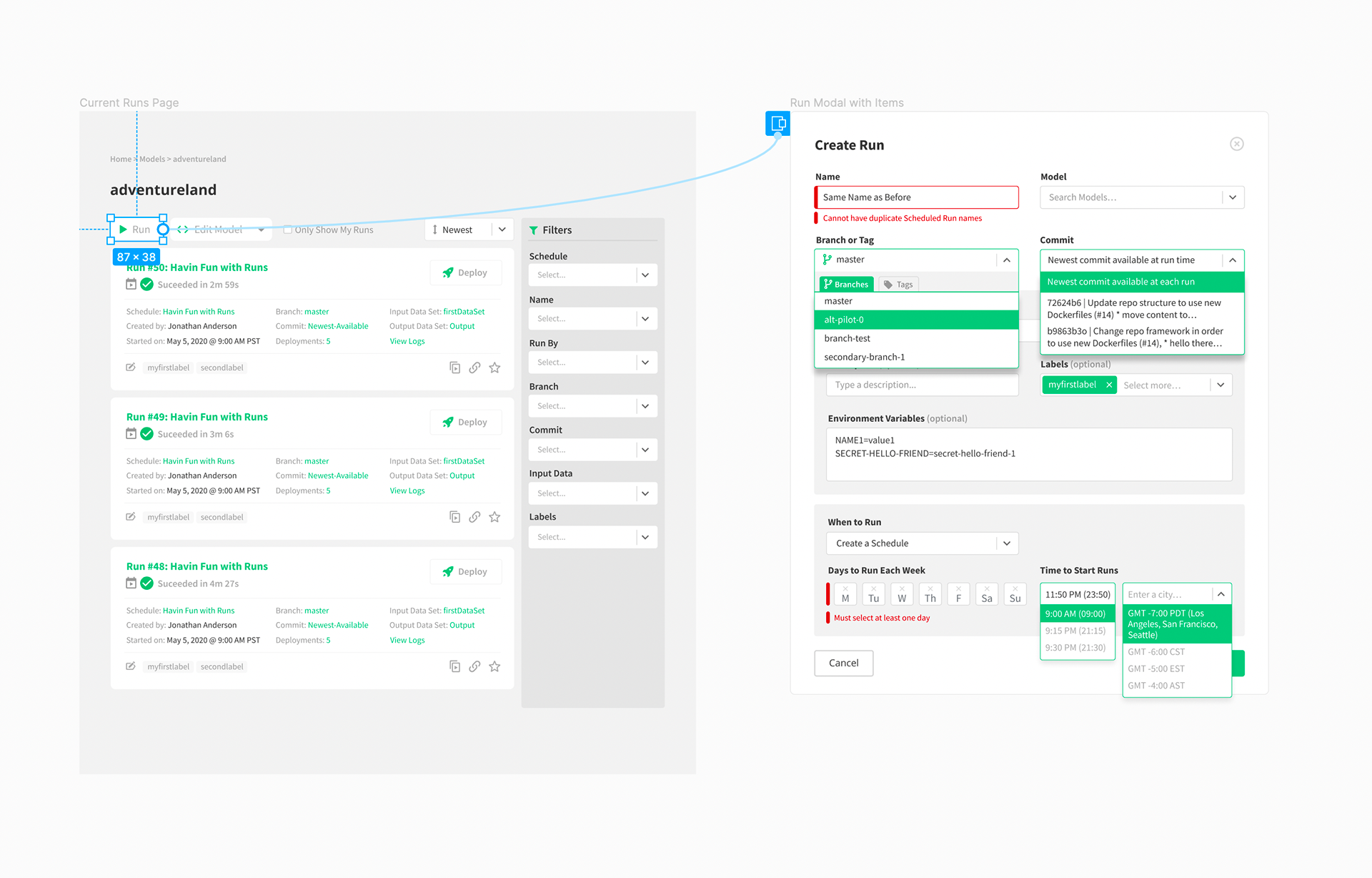
I introduced and standardized a scalable design ops framework, consolidated user feedback streams into a single source of truth, developed personas tied directly to case types and usage patterns, and created a feedback-to-roadmap pipeline that connected research to execution. Collaborated with product extensively to define and prioritize quarterly epics. This was a foundational shift from reactive feature-building to research-backed, intentional planning.
Evolving Information Architecture
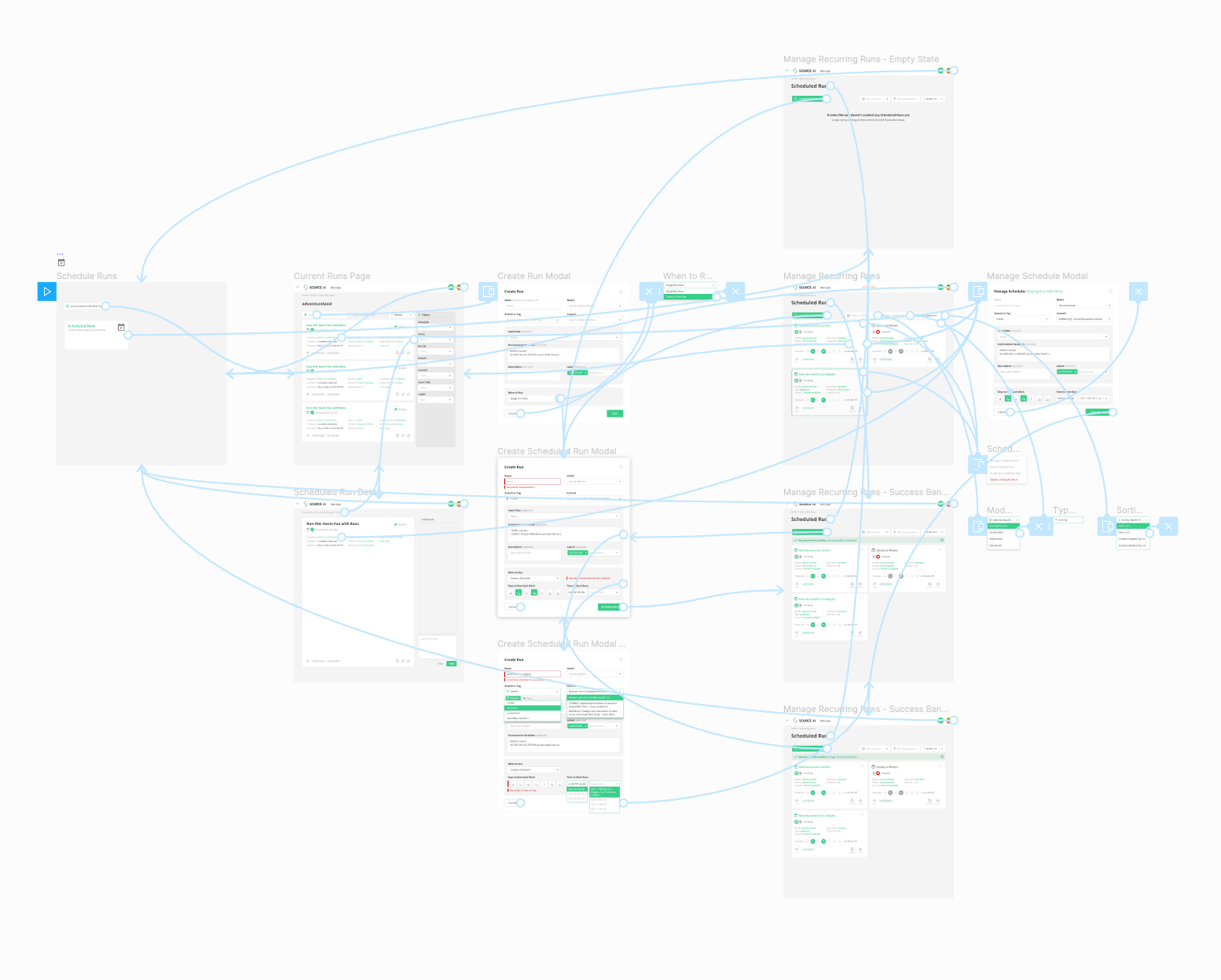
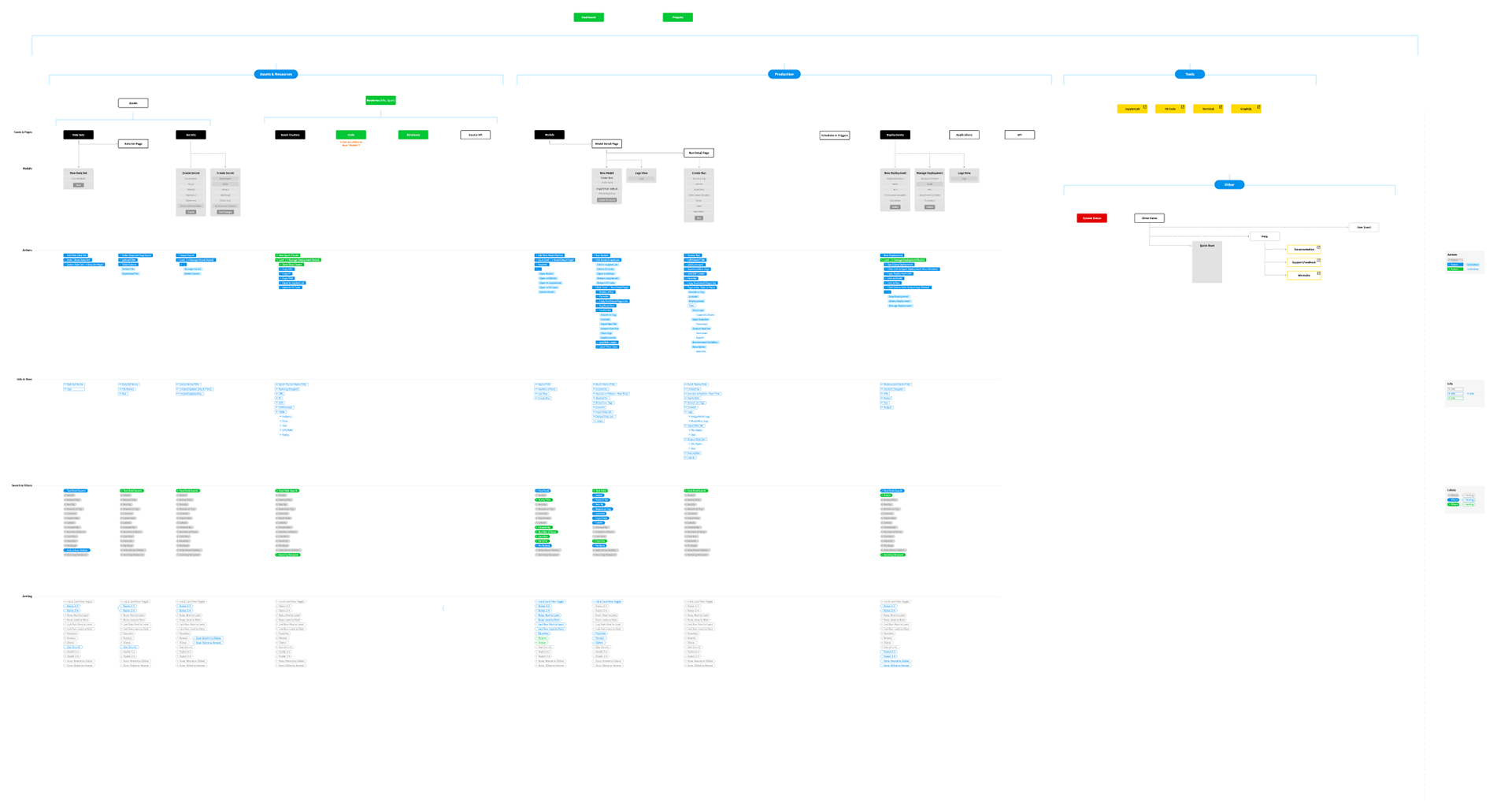
One of the first key contributions was a detailed audit of the platform's information architecture. I mapped out every action and feature across the product, coded issues and gaps, and synthesized insights into a redesigned IA.
This reorganization laid the groundwork for a more intuitive, scalable structure that better aligned with how data scientists approached projects and cases. We were able to unlock new levels of usability and visibility across the team.
This reorganization laid the groundwork for a more intuitive, scalable structure that better aligned with how data scientists approached projects and cases. We were able to unlock new levels of usability and visibility across the team.
Nothing to see here
User Research Processes & Roadmapping
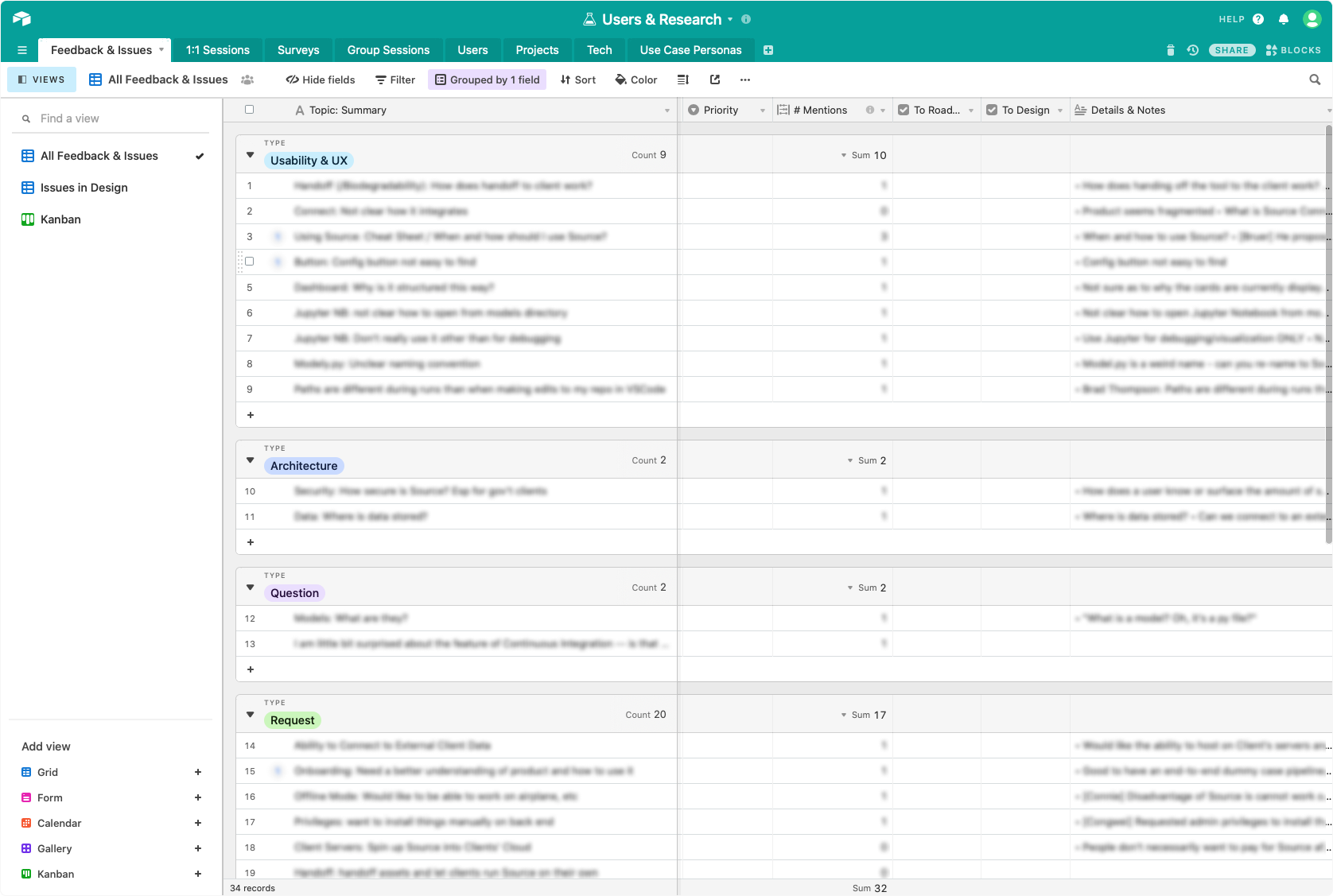
We structured and centralized user research operations across teams, consolidating fragmented inputs from interviews, surveys, and field notes into a single source of truth. This enabled us to clearly surface and prioritize opportunities.
To bridge research to design and roadmap, we created and linked personas tied to actual users and current cases. These were used to guide roadmap planning and feature prioritization alongside product leadership, aligning the entire team around user needs.
To bridge research to design and roadmap, we created and linked personas tied to actual users and current cases. These were used to guide roadmap planning and feature prioritization alongside product leadership, aligning the entire team around user needs.
Nothing to see here
_____________
Navigation & Structure
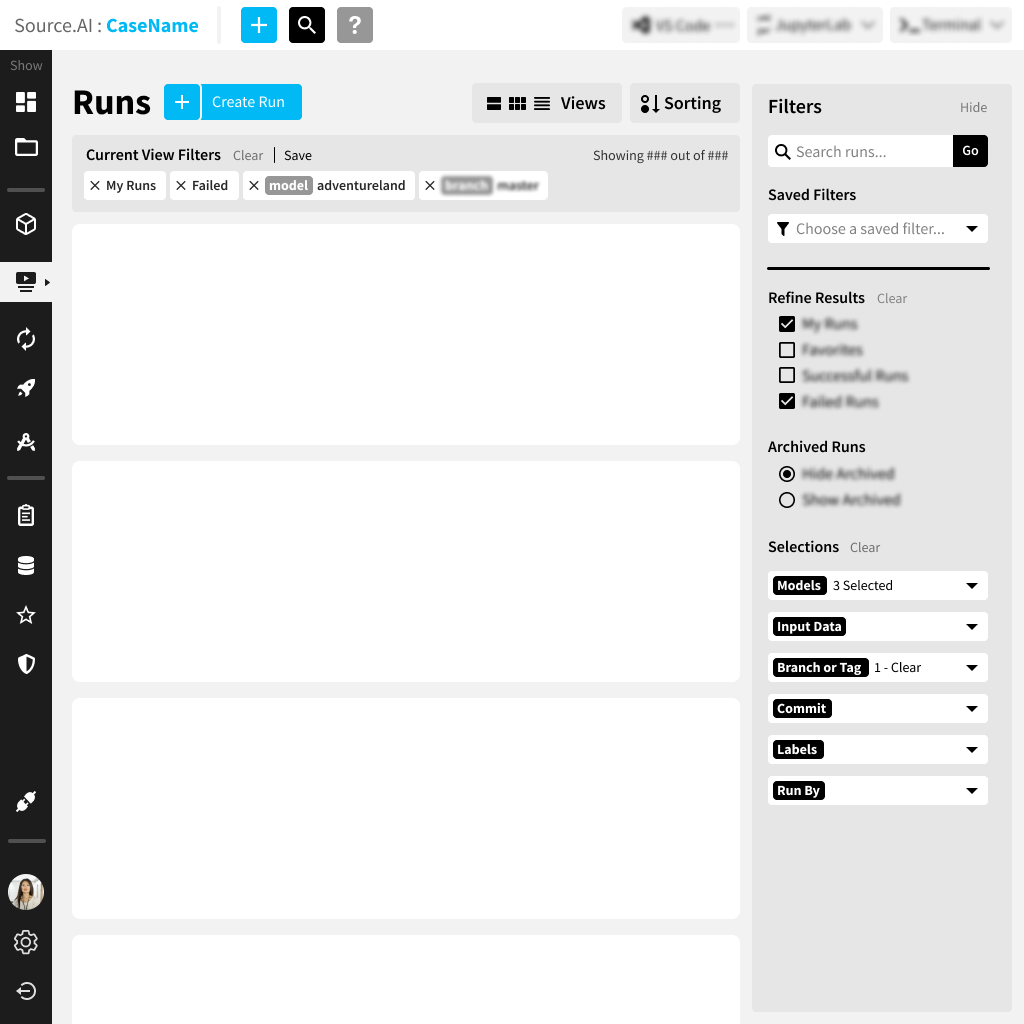
Informed by user research, we redesigned the product’s navigation and filtering systems to reflect the nonlinear, highly variable workflows of data scientists. We prototyped a more flexible, user-centric hierarchy that allowed for better switching, prioritization, and personalization—all without requiring custom setups.
This direction aimed to support individual productivity without sacrificing clarity or platform cohesion.
Better Products for Data Scientists
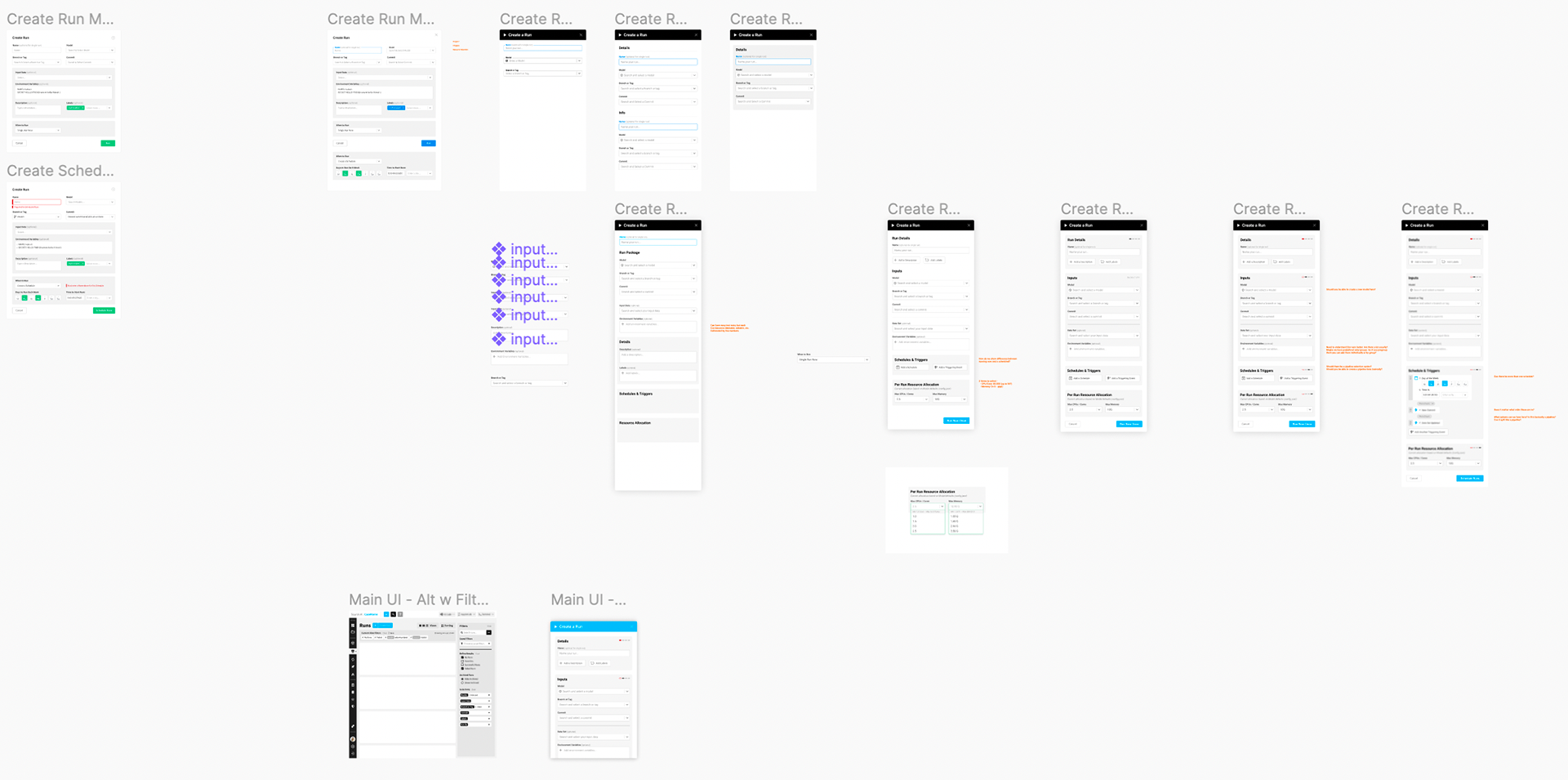
Every new feature and improvement was rooted in simplifying and amplifying the work of data scientists. From redesigning key workflows to restructuring core components, we focused on creating an experience that felt streamlined and powerful.
_______
This was more than a product revamp—it was about transforming how a team builds, learns, and delivers. We created something with true market value, and the acquisition by DataRobot was a meaningful validation of that work. The team, the culture, and the challenge made this an incredibly rewarding experience, and a powerful example of design as a strategic force.
______